
Iru · Creative direction · Jul 2026 — present
From 6K average views to 6.8M+
The concept already existed. What changed was the process around it — and then the process kept going after the first viral videos.
01 — Where Iru started
Trying a lot, with no direction
Iru is a social networking app for meeting new people and doing things together in real life. When I started in July 2026, two content interns, Piper and Amethyst, were producing constantly: street interviews, skits, memes.
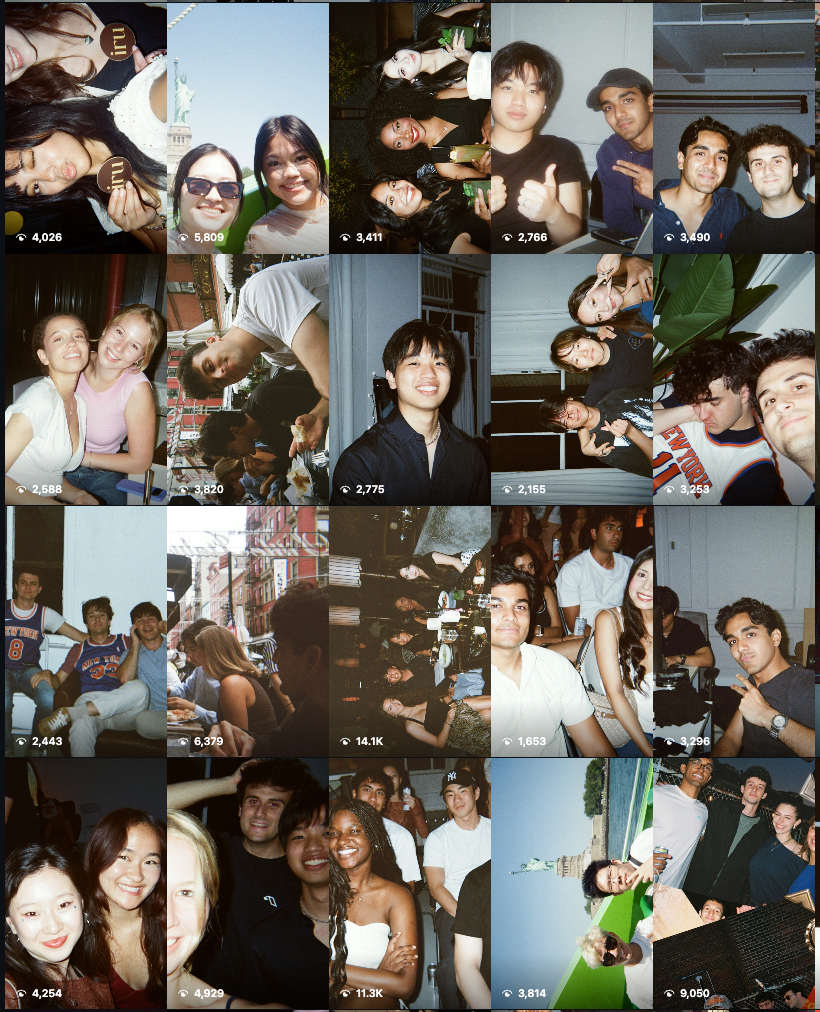
Across roughly 17 videos in two weeks in June, the account averaged about 6K views, with plenty at 1–2K. A few cleared 10K, but those were usually short funny memes with nothing to do with Iru or the experience of using it. Followers weren't moving.
The problem wasn't effort. It was that nobody had defined what a good swing looked like, and the execution was often weak in ways that had nothing to do with the idea.
02 — First pass
The videos weren't good enough to watch
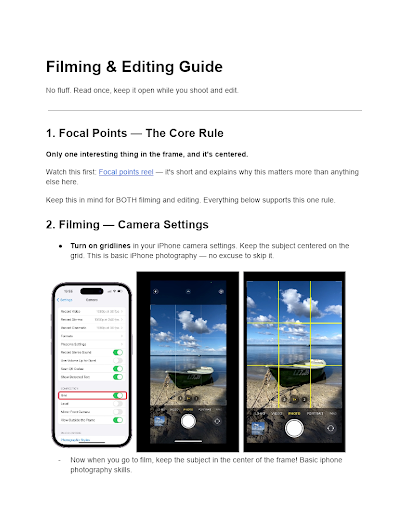
Faces weren't centred. Text sat too low and moved between videos, so the viewer's eyes had to hunt between cuts. Lighting was inconsistent, angles weren't chosen, pacing was slow, captions were messy, and the videos often didn't give you enough to understand what was happening.
I wrote filming and editing guides for the recurring problems — not film theory, just rules they could use while shooting and cutting on their phones. I never touched the footage. Piper and Amethyst were in New York and did all of the filming and editing. My job was their creative decisions.
Cleaner videos, though, are not the same as videos worth watching. The bigger question was what makes this particular kind of content work at all.
03 — Changing approach
I stopped fixing videos and went looking for answers
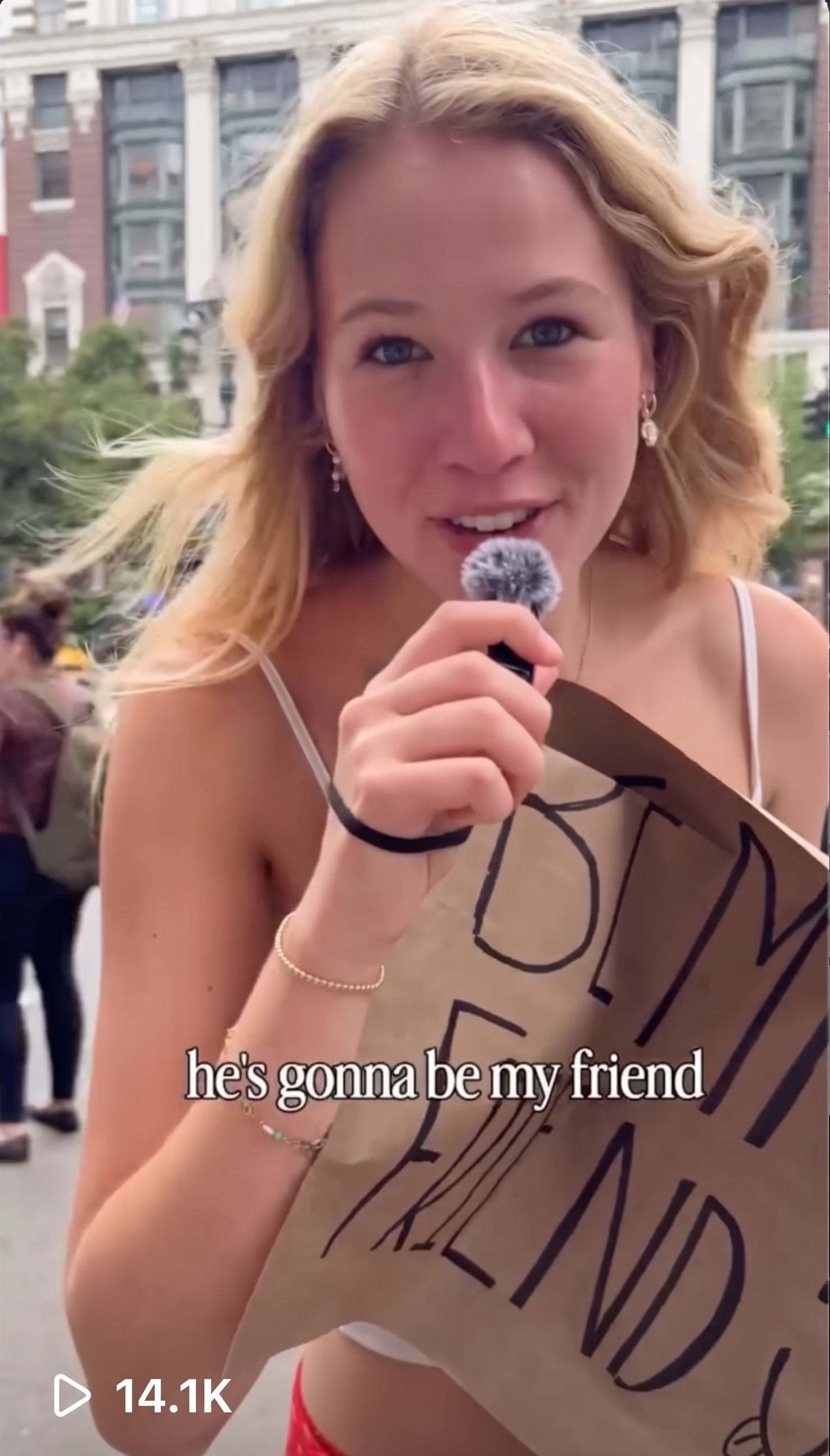
The team's best idea was a “take a stranger to lunch” video that had done almost 14K. The premise fit Iru perfectly — approach a stranger, start a conversation, end up doing something together is literally the behaviour the app exists to enable. But six or seven attempts landed between 1K and 4K.
I'd been giving reactive notes. Fix this shot. Make this faster. Improve the hook. Eventually I realised I was teaching them to patch their own videos instead of showing them how the format is actually built.
So I spent several hours on TikTok and Instagram and found 10–20 viral videos in the format across four or five accounts, then screenshared the research and broke them down with the interns. Not to copy a creator — to find the structure underneath.
 The 14K version
What the working versions had in common
The hook states the premise. “I just moved to NYC and am trying to make friends — could we grab food?” You know the situation and the problem in one line.
Tension arrives immediately. The stranger doesn't say yes right away. That resistance is the reason to keep watching.
The camera feels accidental. Awkward low angles, alternating shots. It reads as secretly filming an experience, not producing an ad.
There's an implied storyline. Not “we asked people to be our friends” but new city, lonely, scared, will she say yes, will we get along.
It creates a specific want. The viewer is watching someone do the thing they wish they were brave enough to do.
The comedy serves the story. Jokes prove the two are getting along. They aren't random memes dropped in for retention.
04 — Adapting it
Why this format, for this product
We didn't copy a viral video. We asked why the format made sense for Iru, and the answer was unusually clean: meeting strangers, overcoming loneliness, finding people with a similar personality, doing something fun in New York. That is the product.
So we built the target viewer into the content. Someone who recently moved to the city and is struggling to build a social life. The hook said it out loud, and later in the conversation the creators steered toward loneliness and how hard it is to make friends somewhere new. Nobody is told here is an advertisement. They're shown the experience the app is for.
The biggest unlock: they didn't actually need to take a stranger to lunch. The stranger was part of the premise, not a requirement of the format.
05 — The breakthrough
1.1M, then 2.1M
Once Piper and Amethyst played both sides themselves, they had chemistry and control over the performance instead of hoping a real stranger would deliver. They leaned into the premise and faked the interaction.
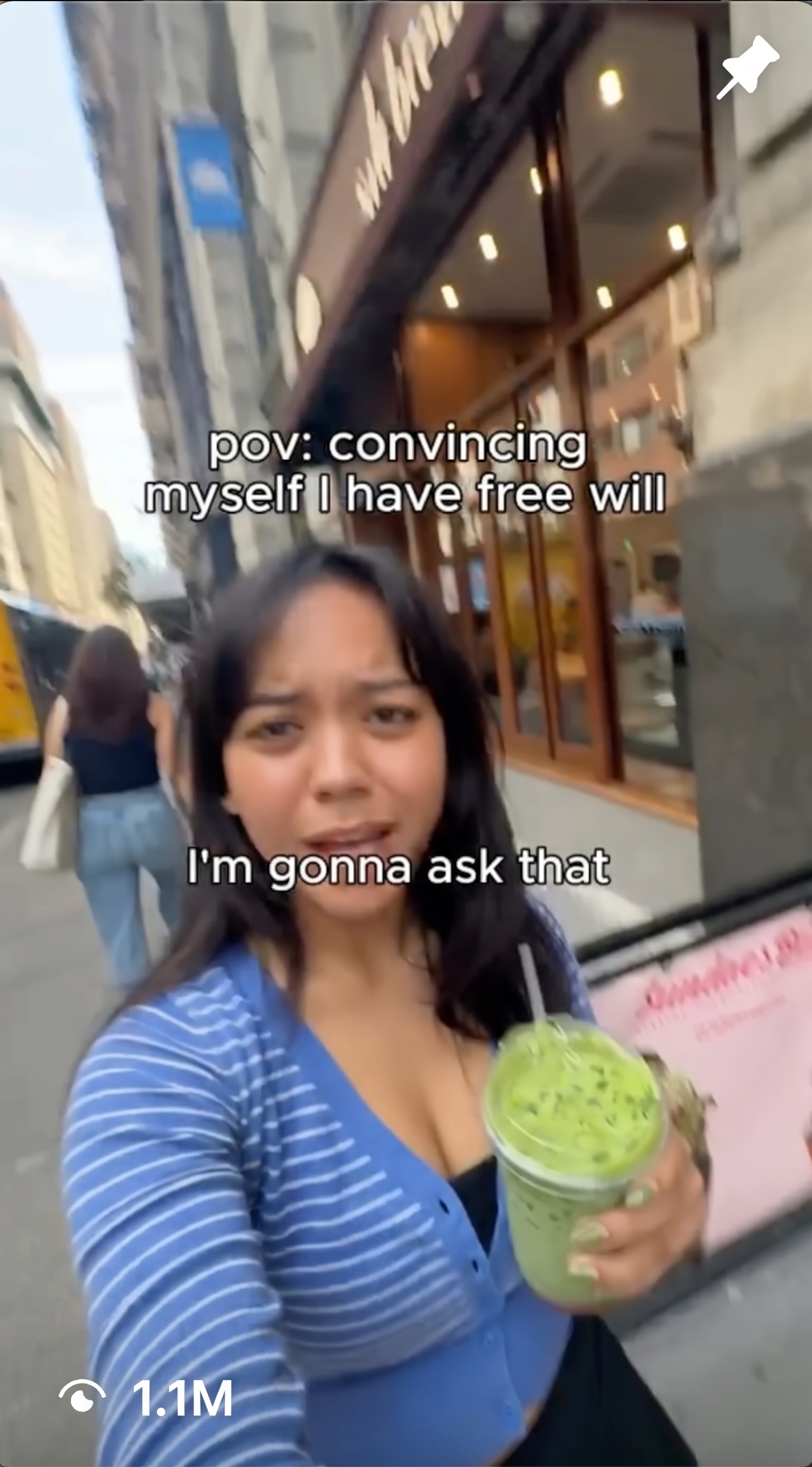
Video one: 1.1M views, 106K likes, 150 comments, 1,738 reposts, 4,731 shares. Video two, same structure: 2.1M views, 220K likes, 416 comments, 3,461 reposts, 15.1K shares. 3.2M+ views between them, and the account went from around 1,000 followers to 3,627.
 Video one · 1.1M
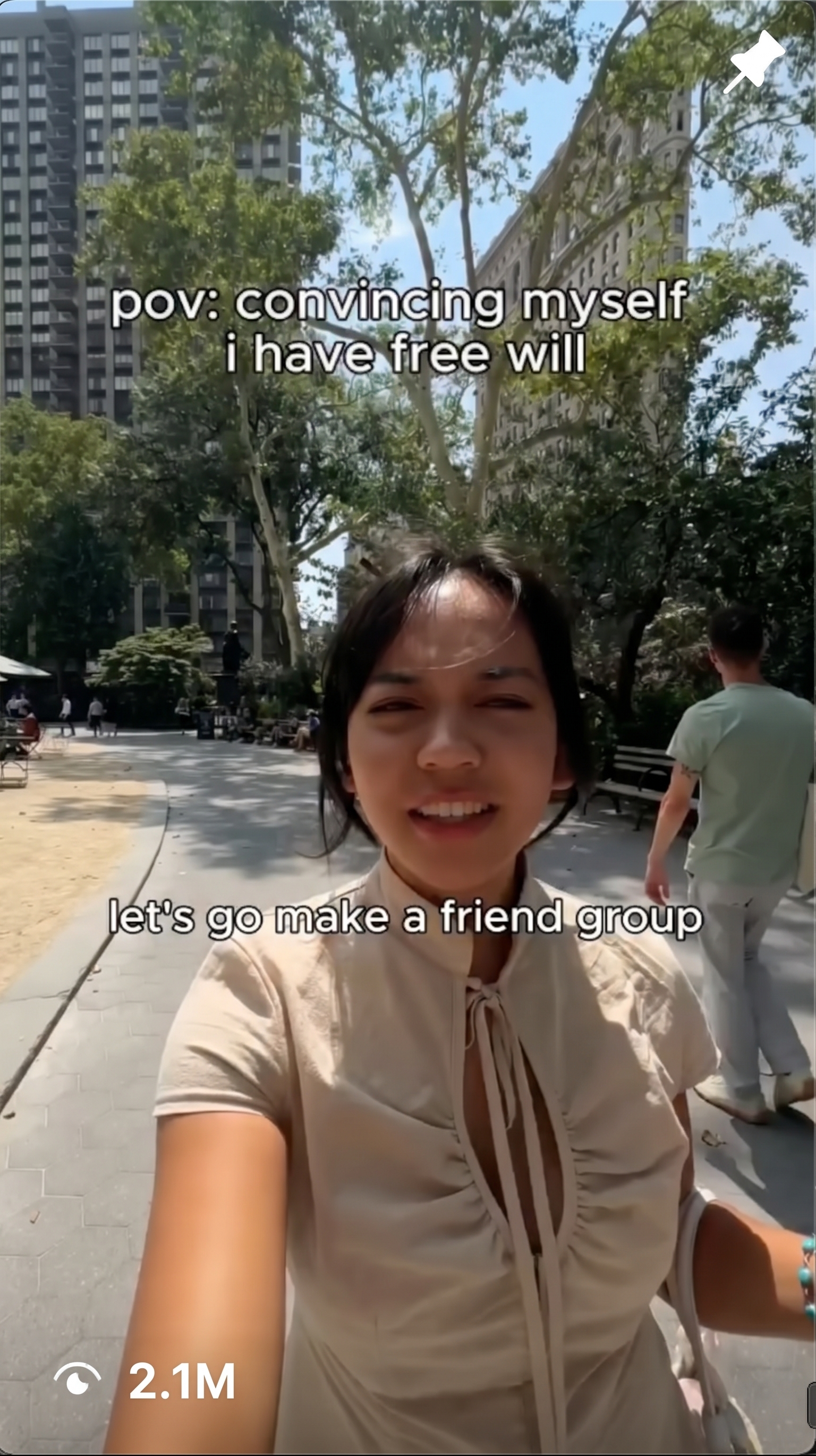 Video two · 2.1M
06 — Whether it reached the right people
Not just traffic
Across the two videos, 48% of the audience was 18–24, 42% in the US, 10% in New York. More telling was the comment section: “I wish it was this easy 😭”, “omg how it's hard to watch this as someone who has social anxiety”.
People weren't just entertained by the premise. They recognised themselves in the problem, which is the audience Iru is built for.
07 — The next problem
Reach wasn't turning into product action
The two viral videos worked as entertainment. They created a lot of desire around making friends in New York, and then didn't do enough with it. The team was saying the name Iru during the plug, but a name means nothing to someone who has never heard of the app.
Which left a specific question: how do you explain what a product actually does in seven to nine seconds without killing the video?
08 — Making the product visible
Same seven seconds, far more information
I showed Piper and Amethyst how we'd handled this on the BeFreed UGC campaign: screen recordings and screenshot overlays that let a viewer understand a product without anyone narrating a feature list. The plug didn't get longer. It stayed at seven to nine seconds and got denser.
While the creators described how Iru worked, we laid the exact visuals over the top — app screenshots, screen recordings, the logo, the specific UI they were referring to. I coached them on the execution, because the whole thing has to land inside a few seconds. The product stopped being a separate commercial and became a visual explanation inside the story.
Find the format, prove the format, find what the format isn't doing, fix that, run it again.
09 — The third iteration
2M views in two days
The next version of the format did 2M views in its first two days and has since reached 3.6M. Vedant says it's converting better than the first two. I don't have exact conversion numbers, so I won't put a percentage on it.
The account is at roughly 8K followers now, against about 1K when I started. Across the three breakouts the format has done 6.8M+ views.
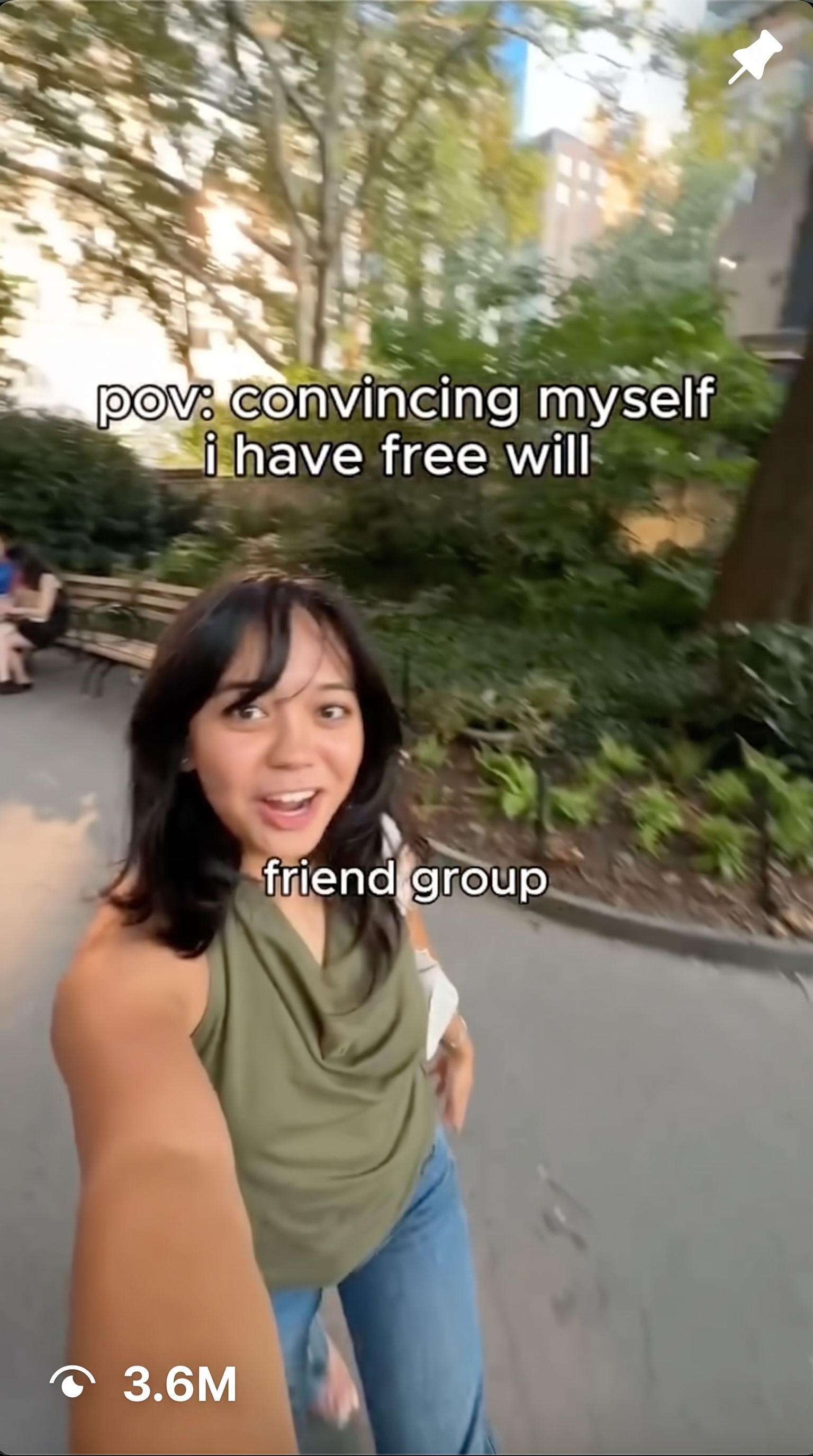 Video three · 3.6M
10 — Honestly
What this was, and what it wasn't
I didn't shoot or edit anything. The interns produced all of it. What I contributed was the thinking around the content: diagnosing the weaknesses, coaching several times a week, researching what was already working, pulling the structure out of it, adapting that structure to Iru's audience, and then reading the results closely enough to find the next problem.
Three copies of the format did 31K, 27K and 10K. Not everything goes viral, and that's fine — the point was that Iru had a direction worth iterating on instead of a queue of unrelated experiments. I wrote a brief and had the creators record a walkthrough of the winning video so the next cohort could pick it up.
The change wasn't that I gave them better ideas. It was moving the team from “let's try this” to “here's why this format works, here's why it fits Iru, here's how it has to be executed, and here's what the last video told us about the next one.”