
Turbo AI · UGC coaching & influencer marketing · Jul–Dec 2025
196M views, and learning to teach what I'd only ever done myself
I joined as a part-time UGC coach because I was a creator. The job turned out to be transferring creative judgment to other people.
01 — The job
Viral instinct, made teachable
Turbo AI is an AI study platform. It grew from about 4 million users when I joined to more than 11 million. The company's thesis was that people who had developed an instinct for what makes content travel could teach it to other creators, so I started part-time as a UGC coach, working with roughly 40 creators at a time inside an existing review-and-approval system.
The coaching went well enough that they brought me on full-time and handed me a second problem to solve: influencer marketing. I ran that lane on my own, from sourcing through payment.
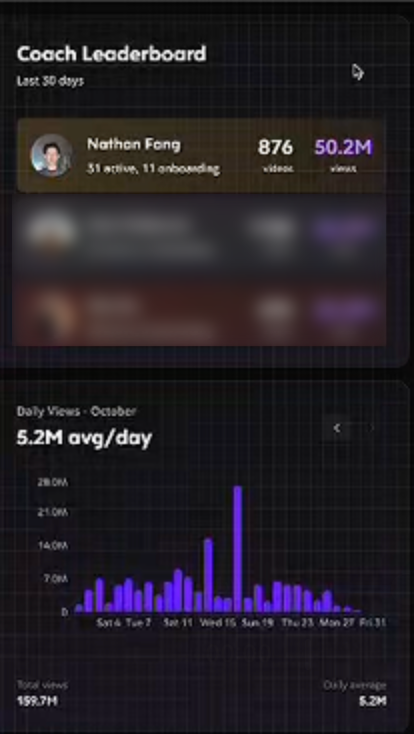 Coach leaderboard
02 — Lane one
Feedback someone can act on in the next take
At peak I was reviewing about 50 videos a day. “Be more energetic” or “improve your hook” doesn't tell anyone what to change, so I learned to break a video into the parts that weaken it: delivery and cadence, dead space between thoughts, caption timing and length, framing and light, whether the hook opened a question, and whether the product showed up as a list of features or as part of the creator's workflow.
Every note followed the same loop: name the specific problem, explain what it does to the viewer, give one concrete adjustment, review the next version. Sometimes the fix was as small as telling someone to explain it like they were on FaceTime with a friend.
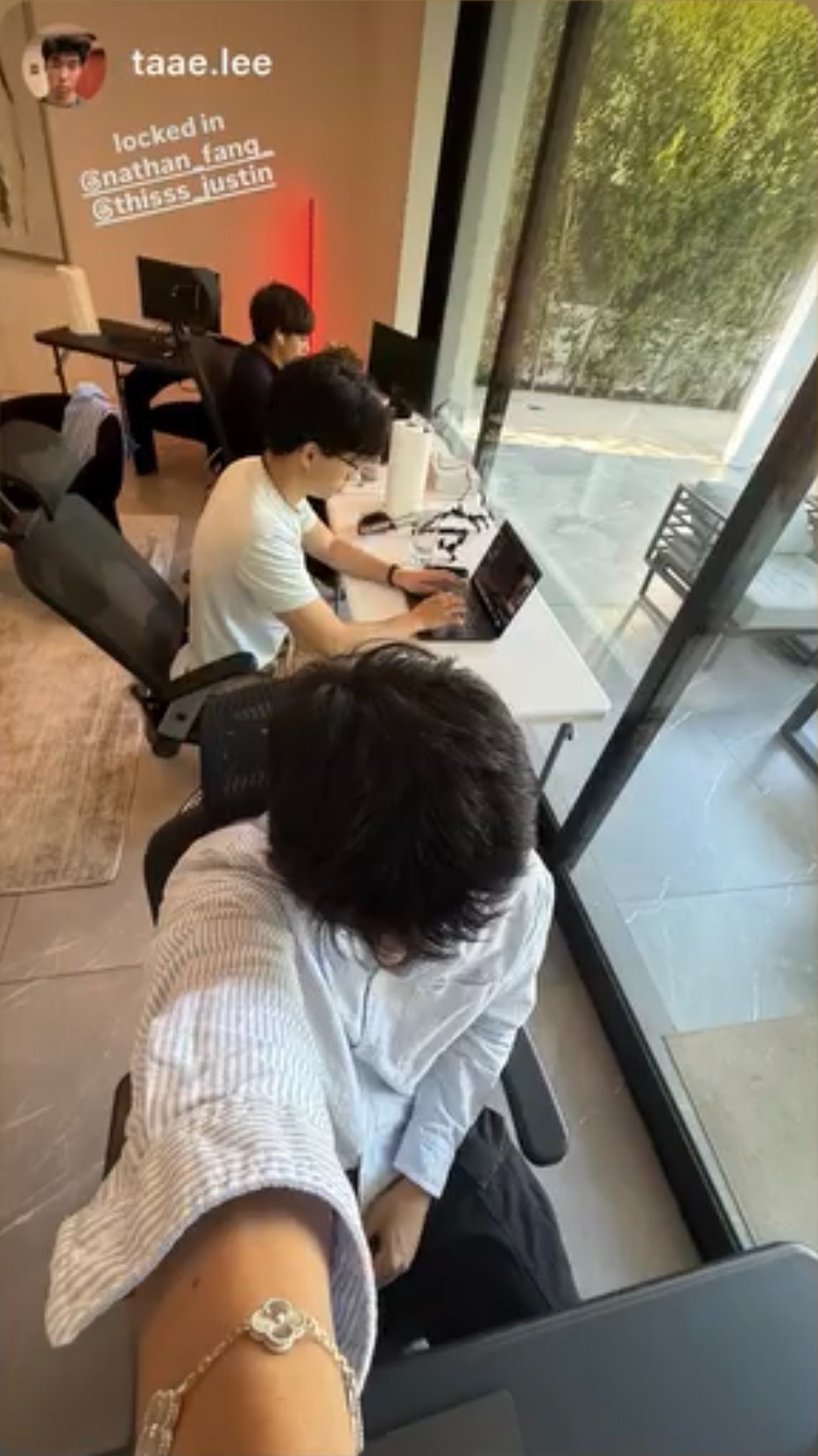 Reviewing drafts
03 — Emma
From no audience to a 50M-view video
Emma came into the program without an established audience or any real foundation in making content. Nothing was broken in an obvious way; she just didn't yet have the fundamentals that experienced creators take for granted.
We worked through them one at a time. Cutting the dead space so the video never stalled. Using captions as a second hook rather than a transcript. Getting her face into better light and making the background less dominant. Finding her natural speaking voice instead of one that sounded performed for the camera. Then we tested different creative angles and narrative approaches until one felt like her.
One of her Instagram videos reached more than 50 million views, and she grew from zero followers to over 70,000. Emma made and posted every video. What I contributed was seeing what was missing from her content specifically, explaining the fix in a way she could act on, and keeping the iterations going until it clicked.
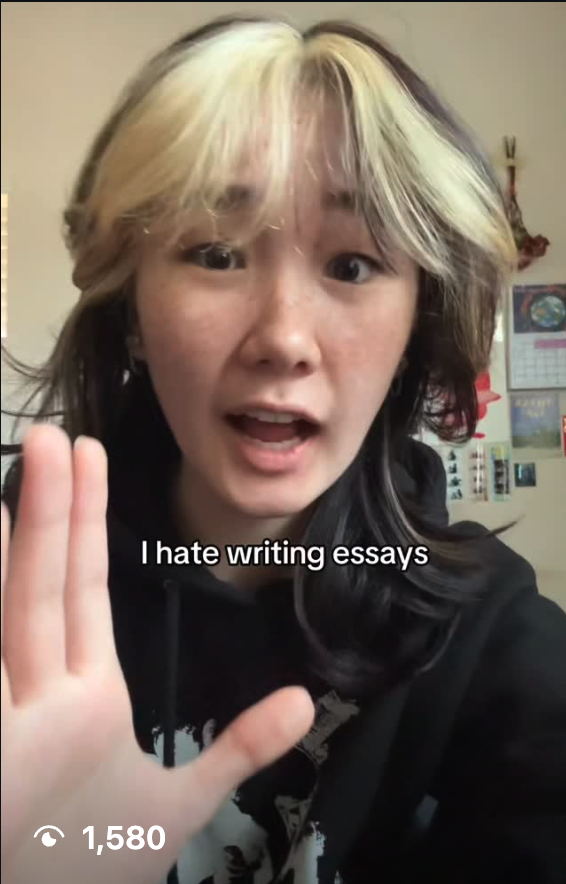 Early · 1,580
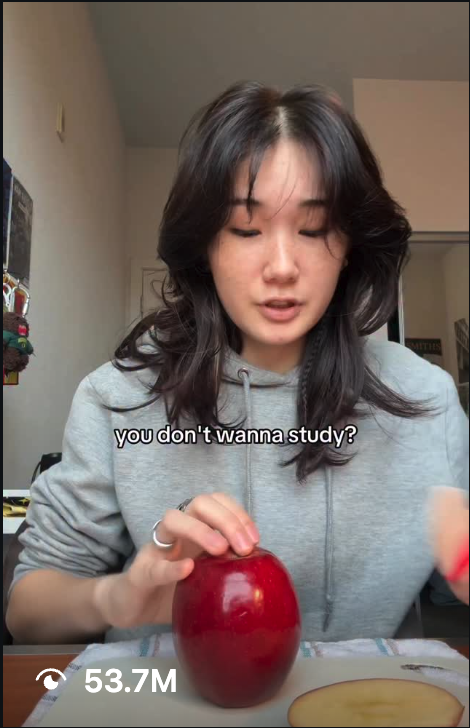 Later · 53.7M
04 — Managing people
Absorbing the mess so creators didn’t have to
Creator performance depended on the relationship as much as the brief. I took a real interest in the creators' lives, gave advice on their own accounts, and was direct when something wasn't working while praising what was. Creators who started out difficult often became easy to work with once there was trust.
Day-to-day communication moved to iMessage group chats, because a text gets answered faster than Discord or email. At one point I was running more than 100 of them. It was messy and hard to switch off from, but it meant less ghosting and faster turnaround on revisions.
Sometimes the organization needs to absorb more friction so that creators experience less of it.
05 — Lane two
An influencer program, and where reach stopped being enough
VAs sourced off TikTok and Instagram's own recommendations rather than hashtag tools, building a sheet that reached about 2,000 rows. I owned everything after that: calls, negotiation, contracts, creative review, verification and payment, with 30–50 influencers active at once. I asked for their rate first, anchored to a $2–3 CPM against average views, and offered bonuses such as $2,000 for a million views inside 14 days. Experienced creators often turned performance deals down.
Sebastian's script looked fine but dropped the open loops that made his own breakout video work; one round of specific feedback and the reel did 2.1M. Nikki's integration kept to two features inside her usual storytelling and reached 992K.
The program did about 50M organic views in four months and was discontinued on profitability and scale. We had no rigorous conversion tracking, so nobody could say which creators were paying back. My role ended when this lane didn't work out.
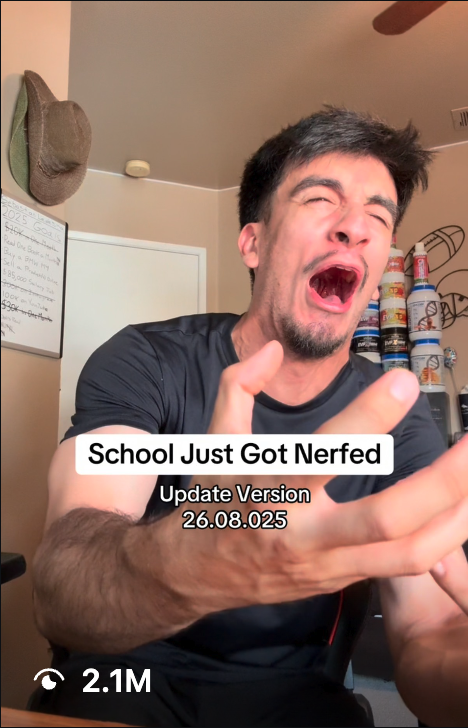 Sebastian · 2.1M
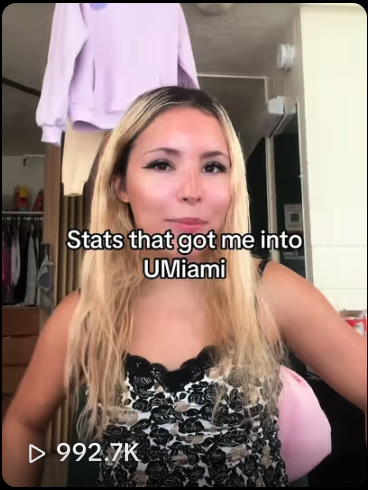 Nikki · 992K
06 — What I took away
Three lessons I still use
Viral intuition only matters if you can explain it well enough for someone else to execute it. Creator performance is partly a management problem: clear expectations, fast feedback, and someone who follows through. And views are an input, not the outcome; a program has to be measured against what it costs and returns.
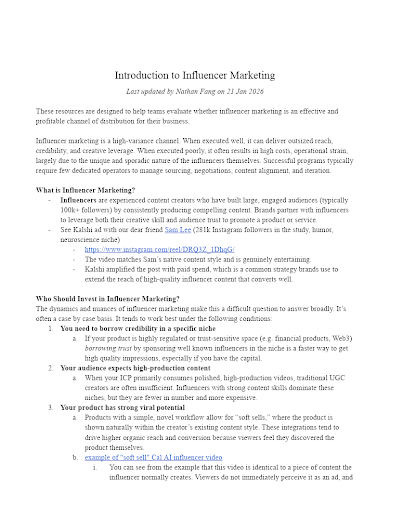
I also wrote the influencer work up as a five-stage guide (selection, sourcing, negotiation, management, post-campaign evaluation) for teams deciding whether the channel is worth running at all.
UGC figures cover the creators I personally coached and are separate from the influencer program's results.